January 23, 2022

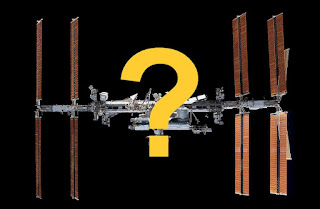
ISS Contingency Planning for Continuity of Operations


There is currently a high possibility of a Russian war against Ukraine, that might even threaten Poland and the Baltics. Further, military actions and protests in Kazakhstan raise the possibility of losing safe use of the Baikonur Cosmodrome by Russian cosmonauts and Progress cargo flights for some period of time.

Therefore, it would be wise for NASA Administrator Bill Nelson and Deputy Administrator Pam Melroy to develop or update contingency plans to continue to operate ISS, the International Space Station in the event of any possible loss of cooperation by Roscosmos, or during a temporary Russian loss of access to Baikonur.

Members of Congress, in their oversight role, should urgently seek such answers. Due to the timeframe, a meeting with the Administrator and members of Congress would be in order.

A graceful exit might include a handover of the Zvezda module with controls unlocked and fully functional. The worst case might be Russians locking or damaging their controls and abruptly departing the station on orders from the Kremlin to create a crisis or hold ISS as ransom for dropping sanctions. It would be hoped that cosmonauts and Roscosmos ground control personnel would not obey any orders that might harm ISS.

If there are existing contingency plans, perhaps any developed at the time of the 2014 Russian invasion of Ukraine--when Russia actually did threaten to deny US crew from launching on Soyuz--then the sole crew transport to ISS, they should be updated to include the capabilities of SpaceX's Dragon, Northrup Grumman's Cygnus and Boeing's forthcoming Starliner for crew transport and reboosting. 

Aside from reboosting, planning would include duplicating if necessary other Zvezda-based critical capabilities, should those be locked or disabled in spite. Planning might fit into two categories. Immediate work and equipment necessary to maintain temporary control of the station. Once secured, the focus would be on permanent modifications or additions for reliable operation for the life of ISS--to at least 2030.

In the event of a full departure from the ISS partnership, it would be wise to invite other nations to join ISS as partners, such as India, UAE and South Korea.

By themselves, contingency plans could help deter a Russian leap to war, as one bit of leverage the Kremlin may threaten to encourage U.S. acquiescence to Russian military goals in Ukraine could be to obstruct the continued operation or survival of ISS. If ISS can survive without Russian systems, then they only 'spite themselves,' and would look weak while we continue operating ISS in their absence.

There are of course a great many contingency plans for every possible emergency on ISS. NASA and other international partners have a responsibility to add or update such plans to assure continuity of operations no matter what happens in the coming months in Ukraine. 

Update: 2/19/22 The Cygnus supply spacecraft just launched to ISS has a new reboost capability, and will be on ISS until May. This added ability to independently change the orbit of ISS weakens any leverage Putin may have to threaten the survival of ISS unless the U.S. drops war sanctions.

If there is no crisis, we would be better prepared should the need ever arise in the future, such as through accident or equipment failure.

Photo of ISS credit NASA.

January 8, 2022

Nelson: Need More $ to Beat China. OK, Ask Congress--Now!

In an interview, NASA Administrator Bill Nelson was asked, "could China beat the U.S. back to the moon?" His initial response was encouraging.  "Not if I have anything to say about it, and not if Joe Biden has anything to say about it."

Following up, the Time reporter asked, "And yet the plans to have American boots on the lunar surface have already slipped from 2024 to 2025 at the very earliest. Part of the problem is that NASA’s funding allows for only one launch per year of the SLS moon rocket. Back in the Apollo era, we launched nine crewed moon missions from just 1968 to 1972."

Here's where Nelson's response contradicted the reality. "For a sustained landing program we’ve got to have more money. That’s in the 2023 budget." 

But it's not. The funding is NOT sufficient to allow us to beat China, which intends to beat the U.S. to the Moon and has unlimited funding to do so. And to wait till FY 2023 to accelerate work on SLS, space suits and other key elements is too late.

A personal address to Congress by the Administrator on both the incredible promise of returning to the Moon and the strategic necessity to beat China to preserve free world access to the Moon would result in bipartisan support for the necessary funding.

Then go to three shifts to get it done, like we did with Apollo. Alternatively, empower SpaceX to run a lunar-direct mission with Starship. Either way, the stakes are higher than during the Soviet Cold War. Then the stakes were merely demonstrating with system was better, tyranny or freedom. Today, the stakes are access to space, the Moon and eventually Mars. Administrator Nelson, are you ready for 'launch?' Go!

https://time.com/6133021/bill-nelson-nasa/  

November 17, 2021

Space Wars by Russia and China

Thecriminally irresponsible Russian test of an anti-satellite (ASAT) weapon could have destroyed or seriously damaged the International Space Station (ISS) and killed Russian Cosmonauts as well as the American and German astronauts. 

But this was predictable, a risk that Putin was willing to take in order to help scare the U.S. and Ukraine into submission. He knew what happens when you smash together two satellites in a crowded orbit.

In July, Putin issued a revanchist statement arguing for seizing Ukraine as well as Poland and Lithuania. Such a war for Ukraine, or a Chinese war for Taiwan may start with destroying U.S. military and commercial satellites to blind our response and make GPS-guided weapons useless.

China similarly and recklessly tested their ASAT weapon in 2007, creating an incredible cloud of destructive space particles--essentially bullets that could perhaps damage or destroy their new military-led space station.

The lesson is that both Russia and China may be willing to sacrifice--for all humanity--future access to space for their immediate goals of military conquest and global domination. Both countries may also be willing to start nuclear wars to serve their ends--potentially destroying life on earth or vast portions of it. Any war today would at the first moments involve destroying U.S. satellites, making orbital space unusable for centuries or longer, absent presently-unknown technologies to remove billions of bullet-like particles from various orbital levels.

It may not be 'popular' or comfortable to hear this, but the nature of dictators has not changed throughout history.

Those are the stakes as Xi and Putin gear up for their intended wars of conquest in this decade. 

The Kremlin backed up their potentially-lethal show of force with a threat to destroy all U.S. GPS satellites.  The rubble from their demonstration remains potentially-lethal, as the hundreds of thousands of large and tiny pieces will continue to threaten the space station and anything in low earth orbit for years or decades. 

Many in the 'space community' throughout the free world find the concept of militarizing space abhorrent, as they should. "Can't we all get along," they wonder. "Can't we have the aggressors sign or obey treaties?" Certainly international pressure is essential to get Russia and China to de-escalate, however treaties are the wrong way to go.

Treaties 'are made to be broken' in the minds of dictators; treaties only tie the hands of the free nations, just like gun control laws only disarm the peaceful and leave families helpless to stop armed criminals. Worse though, treaties lull to sleep the free world into believing that no country would militarize space or would risk destroying all access to space for present-day military gains. The ASAT tests by Russia and China should dispel that myth to careful observers.

The history of reckless military conquests that create only ultimate defeat and destruction does not apparently faze today's dictators. Each is blinded by the allure of victory that they have certainty they will gain. For example, Imperial Japan and Nazi Germany simultaneously declared war on the United States, each assured of victory in their own minds, yet both nations were utterly defeated and devastated. 

Who would buy Russian oil and gas or Chinese products in a post-war depression or societal collapse? Again, these considerations of their own economies collapsing are dim in the minds of those fantasizing about the world at last under their exclusive domination. 

In the present era of American military weakness and an absence of strong leaders here and among some of our allies, we invite a space 'Pearl Harbor" as a prelude to Chinese and Russian wars of conquest. In such wars, the United States may well be defeated, but our current weakness may lower the nuclear threshold, engulfing the world in a nuclear holocaust.

All who want to go to Mars and the Moon, or even to visit or live in earth orbit should raise the alarm that access to space is endangered by the reckless ASAT tests by both Russia and China, and their known plans for a space Pearl Harbor that in fact would destroy access to orbital space for centuries.


July 22, 2021

Apollo 11 and the Democratization of Space


July 20 will always be remembered for the historic landing of Apollo 11 on the Moon in 1969. This year, the anniversary shares the date with the opening of commercial space ventures. Blue Origin, led by Jeff Bezos, achieved its first passenger flight to space, following by just days Richard Branson's flight to space on Virgin Galactic.

This is huge, and ushers in the era of the democratization of space travel, that in coming years and decades will eventually bring suborbital and orbital flights at prices affordable to millions. 

You can see the parallels in your life. The first flat panel TVs cost a fortune, but now huge TVs are available everywhere for a few hundred dollars. Early computers filled buildings and cost millions until Apple and IBM invented personal computers--and today you carry a phone far more powerful than the Apollo spacecraft computers. Likewise, air travel was initially so costly that only the wealthy could fly coast to coast, but for many decades now, domestic and international flights have been affordable for the millions. See, it took the efforts of the creative and determined relative few to bring these ideas to market and through mass production in our free enterprise system, make them affordable and plentiful.

The next step will be orbital flights by SpaceX, Blue Origin and others, where you will be able to travel anywhere on earth within an hour or travel to orbit--and in less than 20 years, these may cost little more than a luxury cruise.

Oddly, some are criticizing Branson and Bezos for their incredible achievements. Envy? Perhaps they would have similarly criticized Henry Ford, Thomas Edison, Alexander Graham Bell, Steve Jobs, Neil Armstrong and all the other 'right stuff' doers, inventors, developers, and creators that built the most prosperous and healthy society in the history of mankind.  

The future of humanity will include hundreds, then thousands, then millions living and working in space, with cities in orbit and on the Moon and Mars. Children will point with awe at the lights on the Moon. The question is will it be a future of freedom in space as developed and protected by the U.S., or a dystopian future of tyranny on and off earth, all owned and controlled by China's dictators? 

Neil Armstrong, Buzz Aldrin and Michael Collins pioneered the way, NASA is on the path to returning Americans to the Moon--hopefully by 2024, and now private entrepreneurs will bring space travel to the thousands and eventually the millions. 

Humanity advances and during this lunar landing week, we should all applaud not only the Apollo pioneers but the new generation of spacefarers who may indeed sell you a ticket to space.

(Photo credit Blue Origin)


July 16, 2021

52 Years Past Apollo 11--When Will We Return to the Moon?

Fifty-two years ago, the entire world united for a week. Everyone forgot their differences and together as one tuned in on radio and TV to watch the greatest feat in the history of humanity.

The first step on another world transformed us in so many ways. Just months before on Apollo 8, we saw for the first time Earth from afar, and then the famous "Earthrise" photo, of the Earth rising above the Moon. 

Imagine this: It is July 16, 1969, and hundreds of thousands of people camped out near the Kennedy Space Center overnight waiting for the launch of Apollo 11. Millions more around the world are glued to their TVs and radios, awaiting the magical moment. It's a bright sunny morning and Apollo 11 is gleaming on the launch pad as technicians check the million-plus systems that all must work perfectly.

The astronauts wave to the cameras as they depart for the pad, and ascend 365 feet to the top of the Saturn V rocket. The hatch is closed and the world awaits...

All systems are GO! The time is 9:32 AM. The world holds its breath!

10, 9, 8, 7, 6, 5, 4, 3, 2, 1, 0! Smoke and fire billow from the mighty engines and slowly the rocket rises, then faster and faster. Humanity cheers on the launch of Apollo 11 on its historic mission to land Americans on the moon.

Apollo 11 is now in orbit. Two hours and 44 minutes later, the engines fired to take the spacecraft out of earth orbit and towards the moon, still a quarter of a million miles distant.

The adventure begins.

Now it's time to return. we CAN make 2024 with the support of the White House, Congress and NASA Administrator Bill Nelson. We MUST return before China beats us back and claims the water-ice bearing craters at the south pole as theirs, just as they do in the South China Sea. 

You can help: Call your Members of Congress in support of the 2024 return to the Moon. 202-224-3121.

May 10, 2021

Bravo to SpaceX -- Successful Starship SN15 Landing

Following previous failures to successfully land prototypes of the Starship spacecraft, SN-15 scored a 100% success in completing the complex flight profile and landing gracefully on the pad. 

This is an important landmark towards making Starship a reliable and cost-effective spacecraft for orbital, point-to-point and lunar missions, as well as to take the first astronauts to Mars.

We may see SN-15 being used again and again to further advance the development.  

China Violated Their Own Promises with Long March 5B Crash

China's second reckless abandonment of Long March (LM) 5B boosters for uncontrolled reentry violated their own 2016 "White Paper on China’s space activities" because the 5B has no deorbit thruster, so every past and future 5B will threaten lives and property on earth.

"9. Space debris. China has improved the monitoring and mitigation of and early warning and protection against space debris... China has also made breakthroughs in protection design technologies, applying them to the protection projects of spacecraft against space debris. In addition, all Long March carrier rockets have upper stage passivation, and discarded spacecraft are moved out of orbit to protect the space environment."

http://english.gov.cn/archive/white_paper/2016/12/28/content_281475527159496.htm