June 22, 2022

SLS and Starship Advance!

In recent news, SLS achieves goals in the 'wet dress rehearsal' where they filled the propellant tanks and tested all the systems through the countdown to just before ignition.

And the FAA finally gave SpaceX environmental clearance to launch from Boca Chica in Texas, pending complying with ridiculous regulations.

Therefore, we may see launches for both SLS and Starship this year, both of which are advances to actually putting American boots on the ground on the Moon, hopefully in advance of China.

Beating China to the Moon is a serious issue, for they have already declared their plan to follow their illegal actions in the South China Sea and make claims to the water ice-rich craters in the lunar south pole. China's military uses of the Moon would be a strategic game-changer--to seize the high frontier, weaponize it, and build their designed military radar to map the world's military assets every 24 hours.

Russian Plans to Leave ISS, Join China


Watch this Chinese Communist Party TV interview with Russian Roscosmos head Dmitry Rogozin. 

In the interview, Rogozin outlines Russian plans to leave the International Space Station (ISS) in 2025 and to build their own new station in a spysat orbit. Russia's space program serves the needs of their aggressive military plans.

Russia can't reach the Chinese military space station with their Soyuz rockets, which would have been embarrassing if they joined the Chinese station but had to ride as passengers in Chinese spacecraft.

Russia will become a junior partner with China's military lunar base on the south pole of the Moon.

A question would be if the imploding Russian space program can muster the budget, talent and quality needed to achieve any of these goals.

Rogozin concludes his interview by threatening the U.S. with nuclear war.

The danger to the entire world is that the nuclear tyrannies may end up ruling the world in this decade as the US has abandoned peace through strength--as seen in the ending of deterrence in Afghanistan and Ukraine and perhaps soon in Taiwan. The present White House doesn't appear to see or care about the shift of world power to the tyrannies, and appears to aid and abet the shift. Space will be one of the key battlegrounds, and preserving free-world and commercial access to orbital space and the Moon will be decisive.

https://www.youtube.com/watch?v=b0l7u_3Rtdc 

April 2, 2022

Roscosmos to End ISS Cooperation


Russia's announcement is perhaps the final word that Roscosmos will end its International Space Station partnership.

The International Space Station will survive thanks to the reboosting capabilities of SpaceX & Northrop Grumman.

But Russia will end up with zero manned space program except perhaps occasional Soyuz flights to nowhere or being a junior partner with China. Soyuz would have difficulty reaching the Chinese space station, ruling out such a partnership unless cosmonauts ride as passengers in Chinese spacecraft.

A sad end, especially for Russian kids and scientists.

Successfully removing Russian modules from ISS may be highly difficult or impossible, and Russia may not have the resources to keep them functional. 

Everyone hopes the ending of the partnership will be smooth, peaceful and cooperative. However, NASA's due diligence must include being alert and prepared to rapidly respond in case the latest Russian cosmonauts or crew remotely from the ground might disable the Russian modules, sabotage equipment or attempt to disconnect their modules.

A hopeful example was set on March 29 when departing Russian cosmonaut Anton Shkaplerov transferred command of ISS to U.S. astronaut Thomas Marshburn. Shkaplerov said, "People have problem on Earth. On orbit we are one crew, and I think ISS is like a symbol of the friendship and cooperation, and a symbol of the future of exploration of space." Further, the Russian crew allowed NASA astronaut Mark Vande Hei to return as scheduled on the Soyuz.

Because ISS can continue to be reboosted by American spacecraft, Russia gains no revenge, but only costs their country their manned space program. 

Sadly for the Russian people, the future of Russian manned spaceflight will now be in jeopardy. Roscosmos may do occasional Soyuz flights to nowhere, to maintain the pretense and avoid a giant talent drain. Russia could become a junior partner on their space station, however because Soyuz cannot reach the orbit of China's space station, cosmonauts would always ride as passengers on Chinese spacecraft. Perhaps cooler heads will prevail.

March 11, 2022

Protecting the International Space Station

A tragic casualty of the Russian war on Ukraine may be international cooperation with Russia on existing and future space projects. None are of course more important than the International Space Station (ISS), where Russia's space agency, Roscosmos, has at least threatened to destroy the station.

In advance of the war, Save Manned Space warned members of Congress to get briefed by NASA on contingency plans to assure continuity of operations in the event of a Russian withdrawal, and to take legislative action giving NASA the funding and authorization to build a propulsion module and other systems so ISS may continue in service until 2030 or beyond.

Both the new Cygnus and Dragon can offer reboosting services, and it is therefore likely that ISS can safely continue operations at least until a US propulsion module, perhaps based on Cygnus, could be launched.

Curiously, while Roscosmos could depart ISS and either remove or disable their Svezda propulsion module, ISS would survive perhaps until the scheduled retirement in 2031. The only difference would be while ISS would still do important science and advance long duration spaceflight, Russia would have essentially zero crewed space program and would be forced to be a very junior partner with China. 

One positive sign is that, at present, astronaut Mark Vande Hei, who will soon reach 355 days on ISS, is still scheduled to return to earth as planned on Soyuz.

January 23, 2022

ISS Contingency Planning for Continuity of Operations


There is currently a high possibility of a Russian war against Ukraine, that might even threaten Poland and the Baltics. Further, military actions and protests in Kazakhstan raise the possibility of losing safe use of the Baikonur Cosmodrome by Russian cosmonauts and Progress cargo flights for some period of time.

Therefore, it would be wise for NASA Administrator Bill Nelson and Deputy Administrator Pam Melroy to develop or update contingency plans to continue to operate ISS, the International Space Station in the event of any possible loss of cooperation by Roscosmos, or during a temporary Russian loss of access to Baikonur.

Members of Congress, in their oversight role, should urgently seek such answers. Due to the timeframe, a meeting with the Administrator and members of Congress would be in order.

A graceful exit might include a handover of the Zvezda module with controls unlocked and fully functional. The worst case might be Russians locking or damaging their controls and abruptly departing the station on orders from the Kremlin to create a crisis or hold ISS as ransom for dropping sanctions. It would be hoped that cosmonauts and Roscosmos ground control personnel would not obey any orders that might harm ISS.

If there are existing contingency plans, perhaps any developed at the time of the 2014 Russian invasion of Ukraine--when Russia actually did threaten to deny US crew from launching on Soyuz--then the sole crew transport to ISS, they should be updated to include the capabilities of SpaceX's Dragon, Northrup Grumman's Cygnus and Boeing's forthcoming Starliner for crew transport and reboosting. 

Aside from reboosting, planning would include duplicating if necessary other Zvezda-based critical capabilities, should those be locked or disabled in spite. Planning might fit into two categories. Immediate work and equipment necessary to maintain temporary control of the station. Once secured, the focus would be on permanent modifications or additions for reliable operation for the life of ISS--to at least 2030.

In the event of a full departure from the ISS partnership, it would be wise to invite other nations to join ISS as partners, such as India, UAE and South Korea.

By themselves, contingency plans could help deter a Russian leap to war, as one bit of leverage the Kremlin may threaten to encourage U.S. acquiescence to Russian military goals in Ukraine could be to obstruct the continued operation or survival of ISS. If ISS can survive without Russian systems, then they only 'spite themselves,' and would look weak while we continue operating ISS in their absence.

There are of course a great many contingency plans for every possible emergency on ISS. NASA and other international partners have a responsibility to add or update such plans to assure continuity of operations no matter what happens in the coming months in Ukraine. 

Update: 2/19/22 The Cygnus supply spacecraft just launched to ISS has a new reboost capability, and will be on ISS until May. This added ability to independently change the orbit of ISS weakens any leverage Putin may have to threaten the survival of ISS unless the U.S. drops war sanctions.

If there is no crisis, we would be better prepared should the need ever arise in the future, such as through accident or equipment failure.

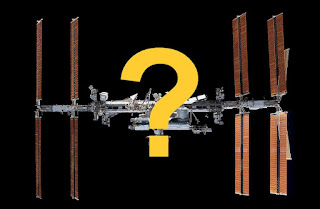
Photo of ISS credit NASA.

January 8, 2022

Nelson: Need More $ to Beat China. OK, Ask Congress--Now!

In an interview, NASA Administrator Bill Nelson was asked, "could China beat the U.S. back to the moon?" His initial response was encouraging.  "Not if I have anything to say about it, and not if Joe Biden has anything to say about it."

Following up, the Time reporter asked, "And yet the plans to have American boots on the lunar surface have already slipped from 2024 to 2025 at the very earliest. Part of the problem is that NASA’s funding allows for only one launch per year of the SLS moon rocket. Back in the Apollo era, we launched nine crewed moon missions from just 1968 to 1972."

Here's where Nelson's response contradicted the reality. "For a sustained landing program we’ve got to have more money. That’s in the 2023 budget." 

But it's not. The funding is NOT sufficient to allow us to beat China, which intends to beat the U.S. to the Moon and has unlimited funding to do so. And to wait till FY 2023 to accelerate work on SLS, space suits and other key elements is too late.

A personal address to Congress by the Administrator on both the incredible promise of returning to the Moon and the strategic necessity to beat China to preserve free world access to the Moon would result in bipartisan support for the necessary funding.

Then go to three shifts to get it done, like we did with Apollo. Alternatively, empower SpaceX to run a lunar-direct mission with Starship. Either way, the stakes are higher than during the Soviet Cold War. Then the stakes were merely demonstrating with system was better, tyranny or freedom. Today, the stakes are access to space, the Moon and eventually Mars. Administrator Nelson, are you ready for 'launch?' Go!

https://time.com/6133021/bill-nelson-nasa/  

November 17, 2021

Space Wars by Russia and China

Thecriminally irresponsible Russian test of an anti-satellite (ASAT) weapon could have destroyed or seriously damaged the International Space Station (ISS) and killed Russian Cosmonauts as well as the American and German astronauts. 

But this was predictable, a risk that Putin was willing to take in order to help scare the U.S. and Ukraine into submission. He knew what happens when you smash together two satellites in a crowded orbit.

In July, Putin issued a revanchist statement arguing for seizing Ukraine as well as Poland and Lithuania. Such a war for Ukraine, or a Chinese war for Taiwan may start with destroying U.S. military and commercial satellites to blind our response and make GPS-guided weapons useless.

China similarly and recklessly tested their ASAT weapon in 2007, creating an incredible cloud of destructive space particles--essentially bullets that could perhaps damage or destroy their new military-led space station.

The lesson is that both Russia and China may be willing to sacrifice--for all humanity--future access to space for their immediate goals of military conquest and global domination. Both countries may also be willing to start nuclear wars to serve their ends--potentially destroying life on earth or vast portions of it. Any war today would at the first moments involve destroying U.S. satellites, making orbital space unusable for centuries or longer, absent presently-unknown technologies to remove billions of bullet-like particles from various orbital levels.

It may not be 'popular' or comfortable to hear this, but the nature of dictators has not changed throughout history.

Those are the stakes as Xi and Putin gear up for their intended wars of conquest in this decade. 

The Kremlin backed up their potentially-lethal show of force with a threat to destroy all U.S. GPS satellites.  The rubble from their demonstration remains potentially-lethal, as the hundreds of thousands of large and tiny pieces will continue to threaten the space station and anything in low earth orbit for years or decades. 

Many in the 'space community' throughout the free world find the concept of militarizing space abhorrent, as they should. "Can't we all get along," they wonder. "Can't we have the aggressors sign or obey treaties?" Certainly international pressure is essential to get Russia and China to de-escalate, however treaties are the wrong way to go.

Treaties 'are made to be broken' in the minds of dictators; treaties only tie the hands of the free nations, just like gun control laws only disarm the peaceful and leave families helpless to stop armed criminals. Worse though, treaties lull to sleep the free world into believing that no country would militarize space or would risk destroying all access to space for present-day military gains. The ASAT tests by Russia and China should dispel that myth to careful observers.

The history of reckless military conquests that create only ultimate defeat and destruction does not apparently faze today's dictators. Each is blinded by the allure of victory that they have certainty they will gain. For example, Imperial Japan and Nazi Germany simultaneously declared war on the United States, each assured of victory in their own minds, yet both nations were utterly defeated and devastated. 

Who would buy Russian oil and gas or Chinese products in a post-war depression or societal collapse? Again, these considerations of their own economies collapsing are dim in the minds of those fantasizing about the world at last under their exclusive domination. 

In the present era of American military weakness and an absence of strong leaders here and among some of our allies, we invite a space 'Pearl Harbor" as a prelude to Chinese and Russian wars of conquest. In such wars, the United States may well be defeated, but our current weakness may lower the nuclear threshold, engulfing the world in a nuclear holocaust.

All who want to go to Mars and the Moon, or even to visit or live in earth orbit should raise the alarm that access to space is endangered by the reckless ASAT tests by both Russia and China, and their known plans for a space Pearl Harbor that in fact would destroy access to orbital space for centuries.